It usually happens on a Friday afternoon in July. The house has been running warm all day, the thermostat says 74, but the hallway feels like 82, and by dinnertime the air coming out of the vents is just moving, not cooling. The system did not fail overnight. It had been failing slowly for about eight months, and nobody was looking.
That is the pattern our technicians see every summer across Midland and Odessa. Very few residential systems die suddenly. Most of them decline quietly through a season of dust, heat, and neglected filters until one 104-degree afternoon pushes them past the point where they can keep up.
This guide is the checklist we wish every homeowner had. It covers what happens during a professional inspection, what you can safely handle yourself, what you should never touch, and what each season demands of a system running in West Texas conditions.
Why Seasonal HVAC Maintenance Matters More Here Than Almost Anywhere
National HVAC advice is written for a national climate. Ours is not a national climate.
A residential air conditioner in the Permian Basin faces a set of conditions that most systems in the country never see:
Airborne dust and caliche. Wind carries fine mineral dust off caliche roads, pads, and open ground. That dust does not behave like normal household lint. It packs into condenser coil fins and forms an insulating layer that traps heat exactly where the system is trying to release it.
Run times that never really stop. From late May through September, many homes here run their cooling system 18 to 22 hours a day. Components rated for a moderate duty cycle are working near continuous duty for four months straight.
Attic-mounted air handlers. A large share of homes in Midland and Odessa have the air handler and much of the ductwork in an unconditioned attic that reaches 140 degrees in August. Every inch of leaky duct up there is pulling superheated attic air into the system.
Short, sharp winters. We do not get a long heating season, and that is precisely the problem. A furnace that sat unused for eight months gets asked to run hard during a hard freeze with no warm-up period. February 2021 taught a lot of homeowners here what happens when heating equipment is asked to perform without having been checked first.
Put those together and the importance of HVAC tune-ups stops being an abstraction. In this climate, a system that receives seasonal attention regularly reaches 15 to 20 years. One that does not is often being replaced at year 10 or 11.
What a Seasonal HVAC What a Tune-Up Actually Is, and What It Is Not
A seasonal tune-up is a scheduled HVAC inspection and service visit performed before a season of heavy use so that small problems are found while they are still small. This is preventive maintenance in the true sense. It happens when nothing is obviously wrong.
A tune-up is not a repair call. If your system is already blowing warm air or making a noise that woke you up, that is a diagnostic visit, and it is a different conversation. See our AC Repair and Diagnostics page for that situation.
A tune-up is also not a filter change with a clipboard. There are companies in every market selling a cheap “tune-up” that amounts to swapping a filter, glancing at the outdoor unit, and leaving a quote for a new system on the counter. A real inspection involves electrical testing, pressure readings, temperature measurements, and combustion checks. If a technician was at your house for 20 minutes and never took a meter reading, you did not get a tune-up.
What Is Included in an HVAC Tune-Up
Homeowners ask this constantly and rarely get a straight answer. Here is what our technicians actually perform, and more importantly, why each step exists.
On the cooling side
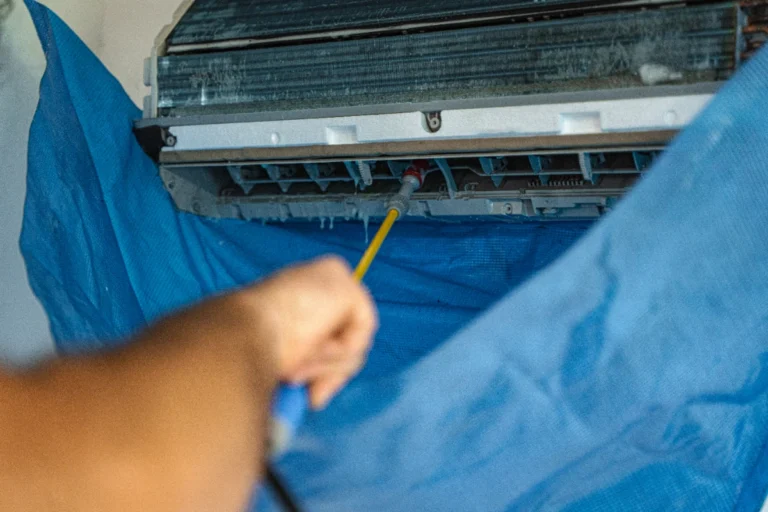
Condenser coil cleaning. The outdoor coil rejects the heat your system pulled out of the house. When dust packs the fins, head pressure climbs, the compressor works harder, and efficiency drops well before you notice a comfort problem. This is the single highest impact item on the list in our region.
Refrigerant pressure and superheat or subcooling readings. Refrigerant does not get consumed. If a system is low, it is leaking. Taking readings tells us whether the charge is correct and whether a leak search is warranted before the system runs all summer undercharged and overheats the compressor.
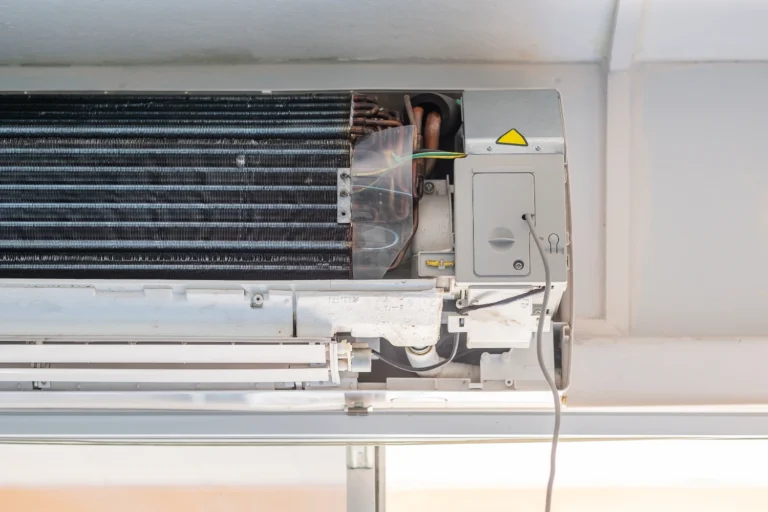
Evaporator coil inspection. The indoor coil collects whatever the filter misses. A dirty evaporator coil restricts airflow, drops capacity, and in bad cases freezes into a block of ice.
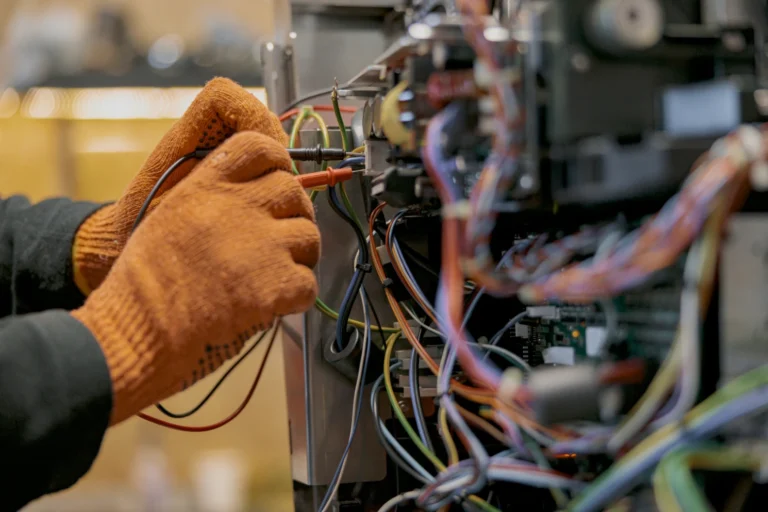
Electrical connections and component testing. Capacitors weaken before they fail. Contactors pit and burn. We test capacitor microfarad values against rating and check amperage draw on the compressor and fan motor. A capacitor reading 20 percent below spec in May is a no cooling call in July.
Condensate drain flush. A blocked drain in an attic air handler does not just shut the system off. It puts water through a ceiling. We clear the line and confirm the safety switch works.
Airflow and temperature split. The temperature difference between return and supply air tells us whether the system is genuinely conditioning air or just running.
Thermostat calibration. Including verifying that programmed settings match how the household actually lives.
On the heating side
Heat exchanger inspection. This is a safety item, not a comfort item. A cracked heat exchanger can allow combustion gases into living space. It gets inspected visually and, where warranted, with additional testing.
Burner cleaning and flame inspection. Burners collect dust during eight months of not running. Flame color and pattern tell an experienced technician a great deal about combustion quality.
Gas pressure and ignition sequence. We verify manifold pressure and watch the full ignition sequence, because intermittent ignition failures show themselves during a controlled test rather than at 2 a.m. during a freeze.
Flue and safety control verification. Confirming exhaust leaves the building as designed and testing limit switches, flame sensors, and rollout switches rather than assuming they work.
Blower assembly service. The same blower runs in heating and cooling, so dust on the wheel costs you airflow in both seasons.
For a full breakdown of our residential service visit and what a scheduled appointment covers, see our HVAC Seasonal Tune-Ups page.
Spring HVAC Maintenance: Getting Ahead of the First 100-Degree Day
Spring is the most valuable maintenance window of the year here and the one homeowners most often let slip past. In March and April the system is not under stress, so nothing feels wrong. The goal of spring service is to find the weak component while there is still time to order a part without you sitting in a hot house.
Spring priorities:
- Professional HVAC inspection for cooling scheduled in March or April, before the first stretch of 95 degree days
- Condenser coil cleaned after the windy season has finished depositing dust
- Capacitor and contactor tested under load
- Refrigerant charge verified and any leak identified early
- Condensate line cleared before humidity season arrives
- Fresh filter installed and a replacement schedule set for the summer
- Vegetation, weeds, and stored items cleared back at least two feet from the outdoor unit
One practical note: spring wind events load an outdoor coil in a matter of days. Cleaning a coil in early March and then getting hit by three dust storms in April means it needs a second look. Check it visually after any significant blowing dust.
Summer HVAC Maintenance Tips: Keeping a System Alive Through a West Texas July
Once the heat arrives, the job shifts from preparation to protection. These summer HVAC maintenance tips are about reducing load and catching trouble early while the system carries its heaviest work of the year.
Change filters more often than the box says. A filter rated for 90 days is rated for average conditions. In a dusty region during peak run time, most homes need a fresh filter every 30 to 45 days in summer. Households with pets should plan on 30 days.
Rinse the outdoor coil gently. With the power off at the disconnect, a garden hose sprayed from the inside of the coil outward removes surface debris. Use normal water pressure. A pressure washer will fold the fins over and do more damage than the dirt was doing.
Keep the outdoor unit clear. Two feet of open space on all sides and five feet of clearance above. Do not stack lawn equipment, fencing panels, or storage bins against it.
Do not close vents in unused rooms. This is one of the most persistent myths in home comfort. Closing supply registers raises static pressure across the system, which strains the blower and can drop airflow across the evaporator coil enough to cause freezing.
Watch for a system that never cycles off. On a 105 degree afternoon, continuous running can be normal. Continuous running on an 88-degree evening is not, and it is usually the first measurable sign of a charge or airflow problem.
Listen at startup. A hard hum or a delay before the compressor engages often points to a weakening start component.
Fall HVAC Maintenance: The Season Almost Everyone Skips
Fall is the quiet season, which is exactly why it gets neglected. The cooling season just ended, the heating season has not started, and the system seems fine. This is the window to have heating checked. Waiting until the first cold snap means calling during the exact week every other household in Midland is calling.
Fall priorities:
- Professional heating inspection in October, before the first freeze warning
- Heat exchanger, burners, and safety controls checked and tested
- Test run the heat for 15 minutes on a mild day, with windows open, and note any burning smell that lasts beyond the first few minutes
- Fresh filter installed for the heating season
- Weatherstripping and door sweeps checked, since load reduction helps a furnace as much as it helps an air conditioner
- Attic insulation levels reviewed, particularly in older homes
- Outdoor unit inspected and cleared of leaves and blown debris
That test run matters more than it sounds. A faint dust burn smell in the first few minutes of the season is normal. A smell that persists, or a furnace that lights and then shuts down, is telling you something before winter forces the issue.
Winter HVAC Maintenance Tips: Short Season, Real Risk
Our heating season is brief, and that creates a false sense of security. Equipment that runs occasionally still fails, and it tends to fail on the coldest night rather than a mild one.
Winter priorities:
- Keep filter changes on schedule even though run time is lower
- Never block return air grilles with furniture, rugs, or holiday decorations
- Keep the area around the indoor unit clear of stored boxes, especially in garage installations
- Know where your gas shutoff is and confirm carbon monoxide detectors are current
- Insulate exposed pipes and replace refrigerant line insulation that has degraded in the sun
- On heat pumps, periodic defrost cycles with steam off the outdoor unit are normal, but ice that does not clear is not
- Hold a consistent temperature rather than large setback swings, which force long recovery run times
If you have a heat pump, our Furnace and Heating System Repair page covers heating-side symptoms in more detail.
The DIY HVAC Maintenance Checklist
Not everything requires a technician. These are the tasks a homeowner can safely perform, and doing them consistently genuinely extends equipment life.
- Replace the air filter on schedule. Every 30 to 45 days during heavy use. Note the size on your phone so you are not guessing at the store. Install it with the arrow pointing toward the air handler.
- Keep two feet of clearance around the outdoor unit. Trim vegetation, move stored items, and pull weeds growing through the base.
- Rinse the outdoor coil. Power off at the disconnect first. Garden hose only, spraying from inside the coil outward.
- Pour a cup of distilled vinegar down the condensate access. Once a month during cooling season helps slow algae and mineral buildup in the drain line.
- Vacuum supply and return grilles. Dust that collects on grilles ends up in the system.
- Check that all supply registers are open, including the ones behind furniture.
- Replace thermostat batteries annually. A surprising number of no heat calls are dead batteries.
- Note anything unusual in writing. Sounds, smells, uneven rooms, and dates. Handing a technician a short history is worth more than most homeowners realize.
These are the HVAC maintenance tips for homeowners that produce the largest return for the least effort. Pet owners should treat the filter schedule as the highest priority item on the list, since pet dander loads a filter faster than anything else in a typical home and moves quickly into the blower and coil once the filter is saturated.
Maintenance Tasks You Should Never Attempt Yourself
Some of this work is genuinely dangerous, and some of it will void your warranty. Both are worth avoiding.
| Task | Why to leave it alone |
| Anything involving refrigerant | Handling refrigerant requires EPA certification. It is regulated, pressurized, and causes serious injury when mishandled. |
| Capacitor testing or replacement | Capacitors hold a lethal charge after power is disconnected. They must be discharged properly before handling. |
| Electrical component work | Contactors, control boards, and wiring carry line voltage. Improper work creates fire and shock risk. |
| Evaporator coil cleaning | The coil is delicate and hard to reach. Damage here often means replacing the coil. |
| Gas line or burner work | Gas leaks and improper combustion are not recoverable mistakes. |
| Heat exchanger inspection | Cracks are frequently invisible without proper access, tools, and training. |
| Blower motor or wheel removal | Reassembly affects balance and airflow, and mistakes here damage the motor. |
There is one more reason worth stating plainly. Most manufacturer warranties require documented professional maintenance. If a compressor fails at year seven and there is no service record, that claim is often denied. The paperwork from an annual inspection is part of what you are paying for.
Common Problems We Find During Seasonal Inspections
After enough years of doing this in one region, patterns emerge. These are the common HVAC issues found during seasonal maintenance visits on residential systems in Midland and Odessa, roughly in order of frequency:
- Dust packed condenser coils. Nearly universal on systems that have gone more than a year without cleaning.
- Weak capacitors. Measurable well before failure, and inexpensive to address on a scheduled visit rather than an emergency one.
- Low refrigerant charge from slow leaks. Often running undercharged for a full season before anyone notices a comfort problem.
- Partially blocked condensate drains. Frequently found within weeks of causing water damage.
- Duct leakage in attics. Conditioned air escaping into a 140-degree attic while the system pulls attic air back in.
- Airflow restriction from filters left in far too long. The most preventable item on this list.
- Failing flame sensors. The most common cause of a furnace that lights briefly and shuts down is a faulty igniter.
None of these are exotic. Every one of them is cheaper to catch on a scheduled visit than during a failure.
Is a Seasonal HVAC Tune-Up Worth It? An Honest Answer
Here is the honest version, including the part that is not a sales pitch.
Where the value is real. A tune-up is worth it if your system is more than three years old, if it runs in dusty conditions, if it is your only source of cooling in a climate where losing it in August is a genuine problem, if you are still inside a warranty period, or if you have not had it inspected in over a year. The value comes from three places: efficiency recovered, failures prevented, and equipment life extended.
Where the value is smaller. If your system is brand new, professionally installed within the last year, and you are diligent about filters, the first year inspection is more about warranty documentation than about finding problems. That is still worth something, but be honest about what you are buying.
Where value disappears entirely. If the “tune-up” is a discounted door opener from a company whose real business is selling replacement systems, you are not buying maintenance. You are buying a sales visit. The tell is a technician who spends more time discussing your system’s age than measuring its performance.
How Regular Maintenance Actually Lowers Energy Bills
The mechanism is worth understanding, because vague promises about savings are easy to make and hard to verify.
A dirty condenser coil raises condensing temperature and pressure. Higher head pressure means the compressor draws more current for the same amount of cooling, which is a measurable increase in electricity use with no comfort benefit.
A restricted filter reduces airflow across the evaporator coil. Less airflow means less heat absorbed per cycle, so the system runs longer to reach setpoint. Longer run time means higher consumption.
Duct leakage in a hot attic is the quietest of these and often the largest. Air you already paid to cool gets delivered into the attic while the return pulls superheated air back in.
None of these produce a dramatic overnight change on one bill. What they produce is a system that quietly costs more to run than it should, month after month, until someone measures it.
Warning Signs Your System Needs Service Right Now
Stop waiting for a scheduled visit if you notice any of the following:
- Warm air from the supply vents while the system is running
- A burning or electrical smell, at any time
- Water pooling near the indoor unit or a stain appearing on a ceiling
- Grinding, screeching, or metallic scraping sounds
- The system trips a breaker, even once
- Short cycling, meaning the unit starts and stops repeatedly within a few minutes
- Ice on the refrigerant lines or on the indoor coil
- A sharp, unexplained jump in your electric bill with no change in weather or usage
- Any burning or gas smell during heating operation, which means shutting the system off and calling immediately
The last item is not a maintenance issue. That is a safety issue and it warrants leaving the house before making the call.
How Often Should You Schedule HVAC Maintenance?
The standard answer is twice a year: cooling in spring, heating in fall. That holds up well in most of the country. In West Texas we suggest one adjustment. Twice a year stays the baseline, but homes meeting any of these conditions benefit from an additional mid summer check:
- Located near unpaved roads, active pads, or open ground
- Multiple pets in the household
- System older than 12 years
- Attic mounted air handler with long duct runs
- Cooling run times consistently above 18 hours a day in peak season
The mid summer visit is short and focused. It is a coil check, a filter change, and a pressure reading at the point in the season when the system has taken the most abuse.
Choosing an HVAC Contractor in West Texas
Four questions most homeowners do not think to ask:
What does the inspection actually include?
A company that can describe its process in specifics is a company that has one.
Are readings documented?
Refrigerant pressures, capacitor values, temperature splits, and amperage draws should be recorded so next year’s numbers can be compared against this year’s. Trend data is how failures get predicted rather than discovered.
Do you work on commercial equipment?
Counterintuitive for a homeowner, but a company servicing chillers, boilers, and building automation brings a diagnostic discipline to residential work that a residential-only outfit often does not. Licensing, insurance, and manufacturer certifications matter too, particularly on newer variable-capacity systems.
Frequently Asked Questions
s a seasonal HVAC tune-up worth it?
For most homeowners, yes. The value comes from catching weakening components before they fail, restoring efficiency lost to dust and wear, maintaining warranty eligibility, and extending equipment life. The value is highest on systems more than three years old operating in dusty, high demand conditions, which describes most of West Texas.
What is included in an HVAC tune-up?
A complete inspection covers condenser and evaporator coil condition, refrigerant pressures, electrical component testing, capacitor and contactor condition, condensate drain clearing, airflow and temperature split measurement, thermostat calibration, and on the heating side, heat exchanger inspection, burner cleaning, gas pressure verification, and safety control testing.
How long does an HVAC tune-up take?
A thorough single system inspection generally takes 60 to 90 minutes. Homes with multiple systems take proportionally longer. A visit that ends in 20 minutes was not an inspection.
How often should HVAC be serviced?
Twice a year is the standard: cooling before summer and heating before winter. Homes in dusty conditions, with pets, or with older equipment often benefit from an additional mid summer check.
Is HVAC maintenance really necessary?
Necessary is a strong word, but the tradeoff is clear. Skipping maintenance does not cause immediate failure. It shortens system life, raises operating cost continuously, and shifts repairs from scheduled to emergency, which is always the more expensive and least convenient version.
Can I perform HVAC maintenance myself?
Partly. Filter changes, clearing space around the outdoor unit, gently rinsing the condenser coil, flushing the condensate line, and keeping vents clear are all safe. Refrigerant, electrical components, gas connections, and heat exchangers require a licensed HVAC technician.
When should I schedule HVAC maintenance?
March or April for cooling and October for heating. Scheduling before the season starts means availability, no emergency premium, and time to source parts if something is found.
What happens if I skip HVAC maintenance?
Coils load with dust and efficiency drops. Small refrigerant leaks go undetected. Weak capacitors fail without warning. Drain lines block and cause water damage. Most significantly, warranty claims can be denied without service documentation.
Does HVAC maintenance lower electric bills?
It does, though the effect is gradual rather than dramatic. Clean coils, correct refrigerant charge, and unrestricted airflow reduce the electrical work required per unit of cooling. Systems running with dirty coils and restricted airflow commonly consume noticeably more power for the same comfort.
Is HVAC maintenance required for the warranty?
Most manufacturer warranties require documented professional maintenance. Read your specific warranty terms, but if a major component fails and no service records exist, denial is a real possibility.
Getting on a Schedule
Most of what breaks in a residential HVAC system here is visible months before it becomes an emergency. Dust builds on a coil. A capacitor drifts out of spec. A drain line narrows. A refrigerant charge slips low. None of it announces itself, and all of it is measurable by an HVAC technician who knows what to look for.
The homeowners who get 18 good years out of a system are not lucky. They put it on a calendar.
GENMECH HVAC has served Midland, Odessa, Lubbock, and San Angelo since 2008. Our team brings over 30 years of combined technician experience and works on everything from residential systems to commercial chillers and building automation, so the person inspecting your home system diagnoses far more complex equipment for a living. We are veteran-owned and family-operated, and we answer the phone.
Ready to get your system checked before the next season hits? Call (432) 528-8905 or request a residential inspection through our Maintenance Agreements page to keep it on a recurring schedule.