Main Points Covered in This Article
- Why Midland summers put more strain on a home AC system than almost anywhere else in Texas
- How West Texas dust and dry air quietly damage equipment months before it fails
- The most common reasons an AC runs but stops cooling a house
- What actually happens during a professional diagnostic visit, step by step
- How to stay safe indoors while you wait on a repair
- How to decide between repairing and replacing an aging system
- What to have ready when you call so the visit moves faster
When the AC Quits in Midland, the Clock Starts Running
There is a particular kind of dread that comes with walking into your living room on a July afternoon in Midland and realizing the air from the vents is not cold. The thermostat says 74. The house says 88. Outside it is 104° and climbing.
An AC not cooling the house is a problem that is stressful anywhere. In the Permian Basin, it moves fast from inconvenience to genuine health concern because a West Texas home with no cooling can climb past 90 degrees indoors within a few hours. Understanding what is likely happening inside your system and what a technician will do about it takes some of the panic out of the situation.
Why West Texas Is Harder on Air Conditioners Than Most Places
A residential AC unit installed in Midland is doing a fundamentally harder job than the identical unit installed in Dallas or Houston. Three local conditions are responsible.
Triple-digit heat leaves no margin for error
Most residential systems are engineered to pull indoor temperature down roughly 20 degrees below the outdoor reading. When it hits 105 outside, a healthy system is fighting to hold 85 indoors. Any small inefficiency, a slightly low refrigerant charge or a dirty coil, stops being invisible and becomes a comfort failure. This is why breakdowns cluster in the first serious heatwave. The weakness was there in May. June just exposed it.
Fine desert dust chokes coils and filters
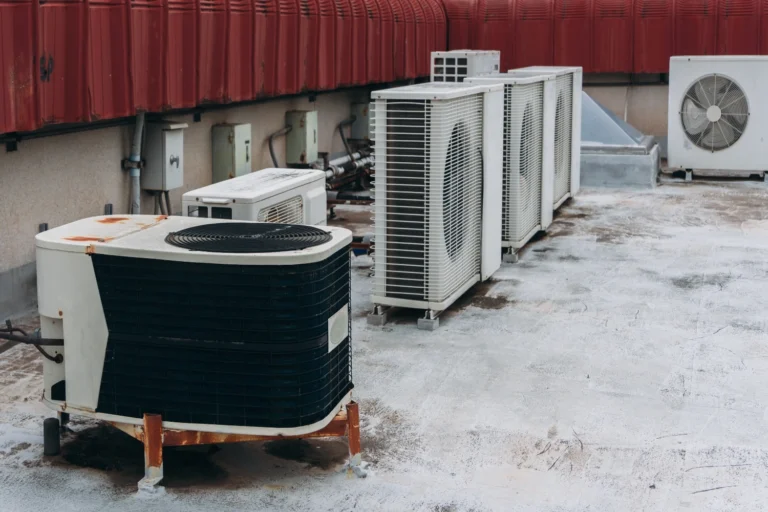
The blowing dust that coats your patio furniture also coats the outdoor condenser coil. A dust blanket on that coil traps heat the system is trying to release, so the unit runs longer and hotter to reach the same result. Indoors, filters load up far faster than the manufacturer schedule assumes. The end result is often AC short cycling, where the system switches on and off in rapid bursts. Short cycling is hard on electrical components and is one of the fastest ways to burn out a capacitor or a compressor in this region.
Dry air breaks down seals, wiring, and duct connections
Low humidity is comfortable to live in and brutal on materials. Rubber seals, wire insulation, and older duct connections in a hot Midland attic dry out, crack, and separate. The homeowner never sees it. What they see is a system that runs constantly and a utility bill that keeps rising while comfort keeps falling.
Common Reasons an AC Stops Cooling a Midland Home
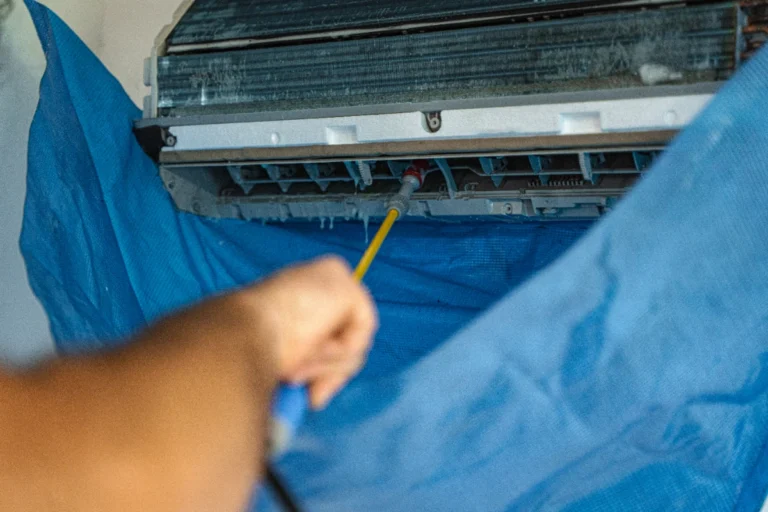
Symptoms are not the problem, but they narrow it down quickly. Use the table below as a reference before you call. Note that professional air conditioning repair services exist precisely because several of these causes look identical from the thermostat and can only be separated with gauges, meters, and hands-on testing.
| What you notice | What it usually points to | How urgent |
|---|---|---|
| AC blowing warm air with the fan still running | Loss of refrigerant charge, failed compressor, or a tripped outdoor breaker | High. Shut the system off to avoid further compressor damage |
| The system turns on and off every few minutes | Restricted airflow from a loaded filter or dirty condenser coil | Moderate. Replace the filter first, then call |
| Ice on the AC unit or on the copper line | Airflow restriction or low refrigerant. The frozen coil is a symptom, never the cause | High. Turn off cooling, run the fan only, and let it thaw |
| Water pooling around the AC or a wet ceiling stain | Blocked condensate drain line, common when dust builds up | Moderate to high, because of water damage risk |
| AC making a loud noise, grinding, buzzing, or screeching | Failing fan motor, loose blower wheel, or a strained electrical part | High. Continued running risks a larger failure |
| The house cools unevenly; some rooms never get there | Duct leakage in the attic or blocked returns | Low urgency, high cost over time |
| The outdoor unit is silent; indoor fan works | Capacitor failure, contactor failure, or a tripped disconnect | High during a heatwave |
What Actually Happens During a Professional Diagnostic Visit
One of the most frustrating parts of a breakdown is not knowing what the technician is doing out there for 45 minutes. A proper diagnostic is not guesswork it is a sequence. Here is the order most of it follows.
| Stage | What the technician checks | Why it matters |
|---|---|---|
| 1. Interview | Symptoms, timeline, unit age, service history | An intermittent fault behaves differently than a hard failure |
| 2. Airflow | Filter condition, return sizing, blower operation, coil cleanliness | Airflow problems mimic refrigerant problems and are far cheaper to correct |
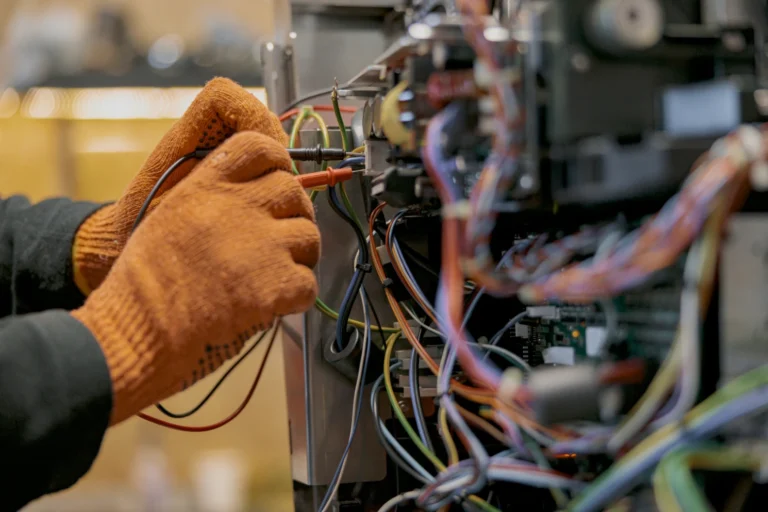
| 3. Electrical | Capacitor value, contactor, wiring integrity, voltage and amp draw | Dust, heat, and short cycling make electrical parts the most common local failure point |
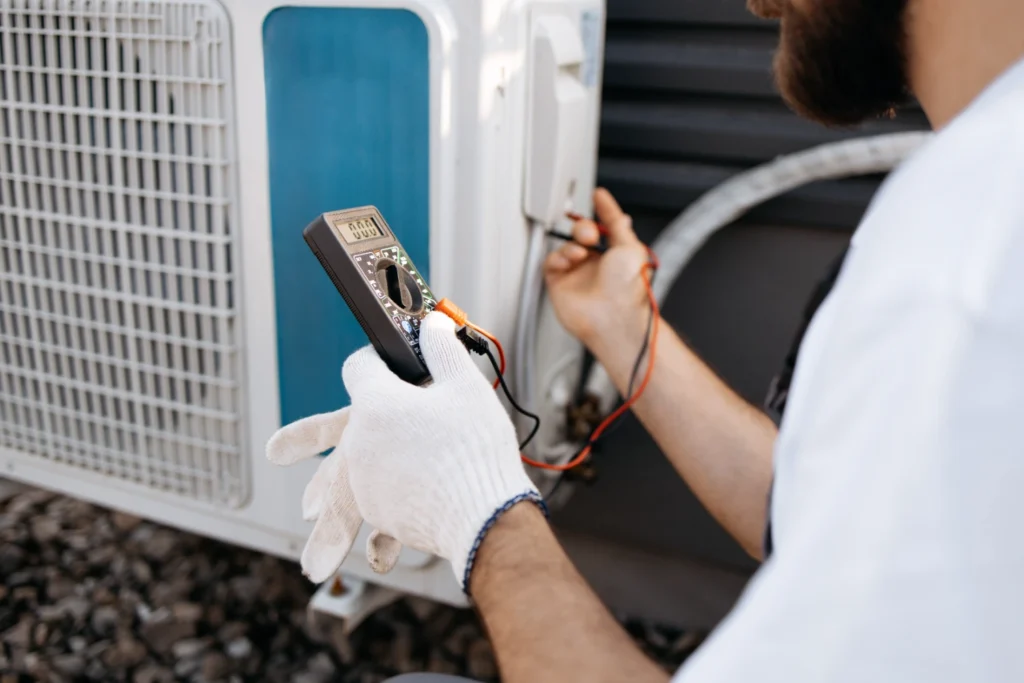
| 4. Refrigerant | Pressures, superheat and subcool readings, leak search if indicated | Numbers confirm or rule out a leak rather than assuming one |
| 5. Controls | Thermostat calibration, sensors, safety switches, drain float | A failed float switch or miswired thermostat can shut down a healthy system |
| 6. Findings | Written explanation of cause, options, and what happens if it waits | You should never approve work you cannot explain to someone else |
Why some faults take longer to find than others
A slow diagnosis usually means the opposite of what homeowners assume. Two problems genuinely resist quick answers. Intermittent electrical faults, where a component fails only once it reaches full operating temperature, need the system run under load before the fault reveals itself. Slow refrigerant leaks, the kind that empty a system over two seasons rather than two days, require pressure testing or electronic leak detection to locate. Rushing either one produces a part swap that fixes nothing. Careful HVAC troubleshooting is slower on the day and cheaper across the year.
Why some faults take longer to find than others
A slow diagnosis usually means the opposite of what homeowners assume. Two problems genuinely resist quick answers. Intermittent electrical faults, where a component fails only once it reaches full operating temperature, need the system run under load before the fault reveals itself. Slow refrigerant leaks, the kind that empty a system over two seasons rather than two days, require pressure testing or electronic leak detection to locate. Rushing either one produces a part swap that fixes nothing. Careful HVAC troubleshooting is slower on the day and cheaper across the year.
How to Stay Safe and Comfortable While You Wait
- Shut the cooling off at the thermostat if the unit is frozen or blowing warm air. Running it further can damage the compressor.
- Close blinds and curtains on south- and west-facing windows. In Midland this alone can hold several degrees.
- Run ceiling fans and bathroom exhaust fans, and move air with box fans at night when outdoor temperatures drop.
- Keep hydrated and check on older neighbors and family members. Indoor heat illness is a real risk in the Permian Basin, not a theoretical one.
- Avoid running the oven, and move cooking outdoors if you can.
Should I Repair or Replace My AC?
It is the question every homeowner asks once a diagnosis lands, and “Should I repair or replace my AC?” has no universal answer. It comes down to a handful of honest factors rather than a single rule.
- Age of the system. Units past the twelve-to-fifteen-year mark in West Texas have already lived a hard life, because our run hours per season are far above the national average.
- Refrigerant type. Older systems running phased out refrigerant get harder and more expensive to service every year.
- Repair history. One repair is maintenance. The third repair in two summers is a pattern.
- Which component failed. A capacitor or contactor is a routine fix. Compressor or evaporator coil failure changes the math entirely.
- Comfort performance. If the system never truly cooled the house even when healthy, repairing it only restores a result you were unhappy with.
A good technician lays out both paths and lets you decide, rather than steering you toward the larger ticket by default.
What to Look for in a Home AC Repair Service in Midland, TX
Not every provider is set up for this climate. When you are evaluating a home AC repair service in Midland, TX, a few things separate the serious operators from the rest. Look for technicians who take readings and show them to you instead of quoting from a glance. Look for a company that works on commercial systems as well as residential, since that depth usually means better diagnostic equipment and stronger electrical training. And check that they actually serve the Permian Basin rather than dispatching from hours away, because drive time is the difference between a same-afternoon fix and a night without cooling.
What We Will Ask When You Call
Having two answers ready shortens the visit and sometimes solves the problem over the phone.
- What specific symptoms is your AC showing? Is it making a noise, blowing warm air, cycling on and off, leaking water, or completely dead? Each of those points our technician toward a different starting place.
- Do you know the age or brand of the unit? The brand tells us likely component types and parts availability. Age tells us whether we are looking at a worn item or an end-of-life decision. The data plate on the outdoor unit has both.
Frequently Asked Questions
Why is my AC running constantly but the house never cools?
In Midland this is most often a dust-loaded condenser coil, a restricted filter, or duct leakage in the attic. All three let the system run without delivering the cooling it produces. Low refrigerant charge produces the same symptom, which is why readings matter more than guesses.
Is it normal for an AC to struggle in 105-degree heat?
Some loss of performance at extreme outdoor temperatures is expected. A healthy system should still hold a meaningful temperature difference between return and supply air. If that difference collapses, it is worth a diagnostic.
How often should filters be changed in West Texas?
More often than the box recommends. Local dust load means many Midland homes need a check every 30 days during summer rather than every 90. It is the cheapest failure prevention available to a homeowner.
The Bottom Line for Midland Homeowners
A house that will not cool is not just uncomfortable in West Texas; it is a problem with a deadline. The good news is that most failures we see in Midland trace back to a short list of causes, and most of them are found quickly by a technician who tests rather than assumes. If your system is struggling, our team handles AC repair & diagnostics Midland, TX homeowners rely on through the worst of the season, with the same technicians who service commercial chillers and rooftop units across the Permian Basin.
GenMech HVAC is veteran-owned, family-operated, and built on more than 30 years of combined technician experience. Complex Problems. Simple Solutions. Every Time.
Call (432) 528-8905 to schedule a diagnostic, or send us a message and tell us what your system is doing.