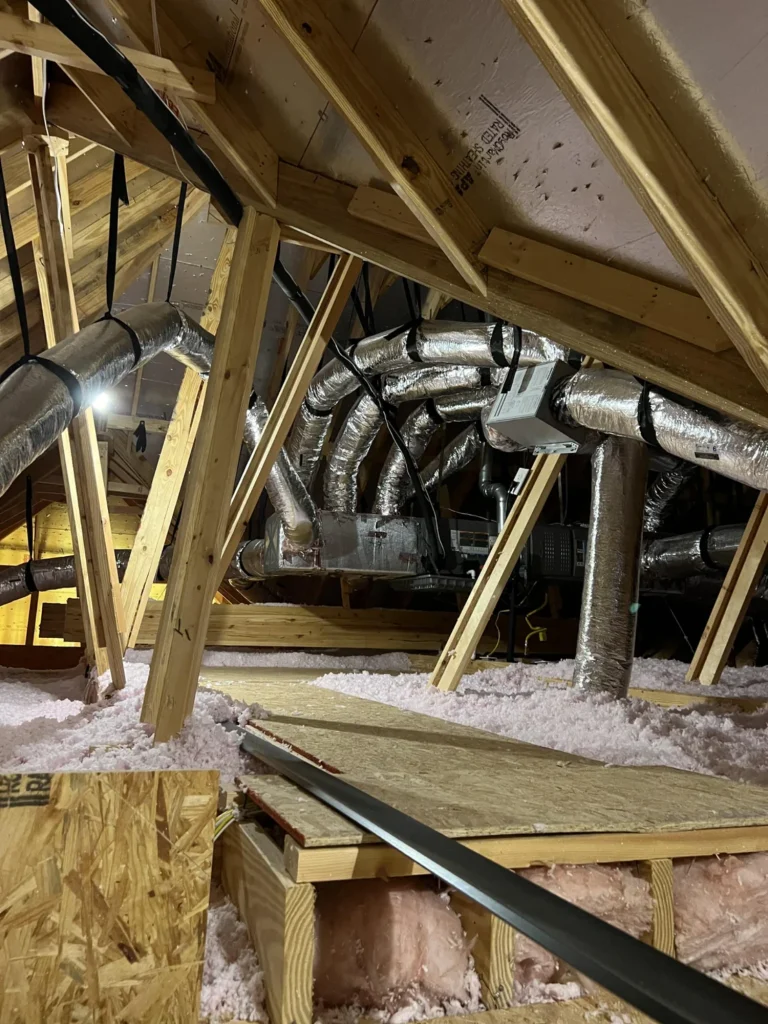
A home buyer recently posted a photo of the attic in a new build they were about to purchase. They had heard that builders sometimes cut corners on ductwork and wanted to know if this install was one of them. Dozens of HVAC technicians weighed in, and the answers were split. Some called it a clean job. Others spotted problems that most people would never notice: straps pinching the insulation, a takeoff tapped off the very end of the plenum, and a drain pan hanging loose under the unit.
That thread shows a real problem. Most property owners have no idea whether their ductwork was installed well until something goes wrong. By then, they have already spent months paying for air that never reaches the rooms it was meant for.
This guide covers what technicians look for, the mistakes that show up again and again, and why duct quality matters even more in Midland than in most places.
Why Duct Installation Quality Matters More in Midland, TX
Your air conditioner can be sized perfectly and still fail to cool the building if the ductwork is wrong. In West Texas, a few local conditions make poor ductwork more costly.
Attic heat is extreme. Most Midland homes and many light commercial buildings run ductwork through unconditioned attics. On a July afternoon, attic temperatures can climb well past 130 degrees. Every leak, crushed section, or thin spot of insulation lets that heat into air you already paid to cool.
The cooling season is long. Midland systems run hard from late spring well into fall. A duct problem that costs a little efficiency each day adds up across that many operating hours.
Dust is constant. A leaky return duct in the attic pulls in dusty attic air and carries it straight through the system. That means dirtier coils, clogged filters, and more dust on every surface in the building.
Want to hear from Midland property owners we’ve worked with? See what they say on Google.
What a Good Flex Duct Installation Looks Like
When technicians praised the install in that new build photo, they pointed to specific details. These are the same things a qualified installer checks on every job.
Flex Pulled Tight, Not Sagging
A flexible duct has a spiral wire core. When it is stretched close to full length, air moves through it smoothly. When it is left loose, the inner liner bunches up and creates ridges that slow the air down. Compressed flex has far more resistance than the same duct pulled taut. Industry installation standards call for sag of no more than about half an inch per foot between supports.
Supports Every Few Feet
Well-installed flex is supported at regular intervals, generally no more than 4 to 5 feet apart. One technician in the thread pointed out “straps every 4 feet” as a sign that the installer cared. Without enough support, the duct sags into low spots and pinches over time.
Wide, Gentle Bends
Air does not like sharp turns. A 90 degree bend with a tight radius acts like a partial blockage. Good installers route flex in long, sweeping curves so air keeps its speed all the way to the register.
Room to Work on the Equipment
Several technicians noticed that the unit in the photo was suspended and had open space around it. That matters more than it sounds. When the equipment is buried behind a tangle of ducts, every future filter change, coil cleaning, and repair takes longer and costs more.
Common Ductwork Installation Mistakes Technicians Flag
Even installs that look neat at first glance can hide problems. These are the issues experienced technicians mentioned most often.
Kinks and Crushed Runs
A single kink can choke off most of the airflow to a room. Kinks often happen where flex turns sharply around a truss, gets stepped on during construction, or gets buried under insulation. If one bedroom or office always runs warmer than the others, a kinked run is one of the first things to check.
Narrow Straps That Pinch the Insulation
This was one of the sharpest comments in the thread. Thin mesh or wire hangers wrapped tightly around flex duct squeeze the insulation at each support point. That creates a weak spot where heat gets in. It can also cause the duct to sweat, because cold supply air sits right against the jacket at that spot. Midland’s air is dry most of the year, but humid stretches after summer storms can still cause condensation at pinch points.
Another technician warned that cheap hangers can slowly collapse the duct over the years. A better approach uses wide straps or saddles, at least 1.5 inches wide, that spread the weight instead of concentrating it.
Tapping Off the Very End of the Plenum
The plenum is the box that distributes air from the unit into individual duct runs. A common production shortcut is connecting a takeoff at the very end of the plenum. Air that reaches the end of a trunk has lost its momentum and tends to swirl, so the run connected there often delivers weak or uneven airflow. Technicians in the thread had different opinions on exact spacing, but they agreed that the last takeoff should sit back from the end cap.
Duct Board Plenums and Boxy Transitions
“Lose the duct board plenums” drew attention for a reason. Plenums built from fiberglass duct board are quick and inexpensive, but the seams can separate over time. Large boxy plenums also let air bounce around rather than flow smoothly into each branch. Sheet metal plenums with properly sized transitions hold up better and move air more evenly.
Leaky Supply Connections
Every joint where a flex run connects to a collar, a plenum, or a boot is a potential leak. A loose joint in a hot attic wastes cooled air right where it hurts most. Properly sealed joints use mastic or approved tape, plus a mechanical fastener, not just a wrap of tape that will peel in the heat.
Drain Pan Problems at the Air Handler
One technician noticed the drain pan hanging from the unit rather than sitting properly supported below it. When an attic air handler overflows, water goes straight through the ceiling below. A secure secondary pan with a working drain or float switch is cheap protection against expensive water damage.
Rushed Production Installs
One of the most honest comments came from a technician who had worked on a new construction crew. He described crews paid per job and pushing to finish two houses a day. That pay structure does not reward careful strapping, sealing, or layout. It is not true of every builder, but it explains why so many buyers ask about new-build ductwork before closing.
Flex Duct vs Rigid Ductwork: Which Is Right for Your Building?
Several technicians said they “still hate flex” and prefer hard pipe. Others defended a well-done flex install. Both points have merit.
Flex duct is faster to install, handles tight attic spaces, and performs well when it is stretched, supported, and sealed correctly. Its weakness is that it depends heavily on installer care.
Rigid sheet metal duct holds its shape for decades, resists crushing, has smoother interior walls, and is easier to seal and clean. It takes more labor up front.
Many good systems use a mix: sheet metal trunks and plenums with short, straight flex runs to the registers. In commercial buildings, rigid duct is the standard for main runs because of higher air volumes and longer distances. GenMech HVAC designs each layout around the building, the equipment, and how the space is actually used. You can learn more about our approach to HVAC duct and vent installation for Midland properties.
Commercial Ductwork: Where the Stakes Get Higher
The same mistakes in a house cause bigger problems in a commercial building. A retail store, office suite, or warehouse office in Midland may run rooftop units that feed long duct runs through a drop ceiling. When those runs are undersized, leaky, or poorly balanced, the result is familiar:
- Hot and cold spots between offices or sales floor zones
- Rooftop units running longer than they should
- Tenant complaints after a finish-out change the floor plan, but the duct layout stays the same
- Higher utility bills with no obvious equipment failure
Tenant finish-outs are a common source of trouble in Midland. Walls move, rooms get added, and ductwork gets extended with whatever fits rather than redesigned. A new room tacked onto an old trunk line almost never gets the airflow it needs.
This is why duct design is part of our broader commercial HVAC services, not a separate afterthought. The ductwork, the rooftop unit, and the controls have to work together.
How to Check Your Own Ductwork
You do not need to be a technician to spot warning signs. One commenter offered simple advice: walk the building on a hot day after the system has been running, and notice whether any rooms feel noticeably warmer than others. That test works in homes and offices alike.
Here is a short checklist:
- Walk each room on a hot afternoon. Note any rooms that never quite cool down.
- Hold your hand at each register. Weak airflow at one or two registers often points to a kink, disconnect, or poor takeoff location.
- Look for dust streaks around supply registers or on the ceiling nearby. They can indicate leaks or dusty return air.
- Listen for whistling or rattling from registers or the ceiling.
- Check the attic if it is safe to access. Look for sagging runs, flattened sections, loose connections, and hangers digging into the insulation.
- Watch your utility bills. A steady climb with no change in use can mean the system is working harder to push air through problem ductwork.
If you find any of these, a technician can measure static pressure and airflow to pinpoint the cause instead of guessing.
Buying a New Build or Leasing Space in Midland? Ask These Questions
Midland keeps growing, and new homes and commercial spaces are going up across the city. Before you close on a new build or sign a lease, it is worth asking:
- Who installed the ductwork, and was it inspected?
- Is the attic ductwork flex, rigid, or a mix?
- Were the duct joints sealed with mastic or tape?
- Has anyone measured airflow at each room or zone?
- Is there a secondary drain pan under any attic equipment?
A general home inspection may not dig into duct performance. An independent HVAC evaluation before closing costs far less than fixing problems after you move in.
Keeping Ductwork Performing After the Install
Even well-installed ductwork needs attention. Straps loosen, tape fails in attic heat, and filters clog faster in West Texas dust. Routine inspections catch these issues before they turn into comfort complaints or equipment strain.
For commercial property owners and managers, a preventive maintenance agreement puts regular filter changes and system checks on a schedule, so ductwork and equipment problems get caught early instead of during the hottest week of the year. GenMech HVAC offers multiple agreement levels so you can match coverage to your building.
Frequently Asked Questions
How do I know if my ductwork was installed correctly?
Uneven room temperatures, weak airflow at certain registers, excess dust, and rising utility bills are the most common signs. A technician can confirm the cause by measuring static pressure and airflow, then inspecting the duct runs, supports, and connections.
Is flex duct bad?
No. Flex duct works well when it is stretched close to full length, supported every few feet with wide straps, routed with gentle bends, and properly sealed. Most flex problems come from installation shortcuts, not the material itself.
Can bad ductwork be fixed without replacing the whole system?
Often, yes. Kinks can be rerouted, sagging runs can be restrapped, leaky joints can be resealed, and poorly placed takeoffs can be moved. Replacement usually becomes necessary only when the layout is fundamentally undersized or the materials have deteriorated.
Why is one room in my house or office always hotter?
The most common causes are a kinked or crushed duct run, a takeoff located at the end of the plenum, a disconnected run in the attic, or a room added without upgrading the duct layout. Sun exposure and insulation also play a role, so a full evaluation helps separate duct issues from building issues.
Does leaky ductwork really affect my energy bill?
Yes. When supply ducts leak in a hot attic, you are paying to cool air that never reaches the living or working space. Leaky returns also pull hot, dusty attic air into the system, which makes the equipment work harder.
The Bottom Line
The technicians in that thread agreed on one thing: good ductwork comes down to care. Pulled tight, supported properly, sealed at every joint, and laid out so air reaches every room. When those details are skipped, the building pays for it every day of a long West Texas cooling season.
Genmech HVAC is a veteran-owned, family-operated team backed by more than 30 years of combined technician experience. We design, install, and correct ductwork for commercial buildings and homes across Midland. If your building has rooms that never feel right, or you want a second opinion before buying or leasing, call (432) 528-8905 or contact our team to schedule an evaluation.