By the GENMECH HVAC team
A commercial HVAC system does not always fail all at once.
In a Midland, Texas, facility, the first signs can be easy to overlook. A rooftop unit may run longer than it used to. One area of the building may stay warmer than another. Energy consumption may increase, or the same equipment may require repairs more often.
Because the system is still operating, it can be tempting to put those changes off.
For businesses in the Permian Basin, that approach can create a larger facility problem later. Midland remains closely connected to the energy industry, while the local economy also includes healthcare, retail, professional services, transportation, warehousing, manufacturing, and a growing aerospace sector anchored at the Midland International Air and Space Port.
Different facilities place different demands on their HVAC systems, but the warning signs are often similar.
The Building Takes Longer to Reach the Set Temperature
A common early warning sign is that the building no longer cools as it used to.
The thermostat may be set correctly, but the HVAC system runs for extended periods without reaching the desired temperature. This can be related to restricted airflow, dirty coils, refrigerant problems, electrical faults, aging components, ductwork issues, or equipment that is no longer performing as expected.
For a commercial facility, longer run times should not automatically be dismissed as a result of West Texas weather.
If the system previously maintained the building without difficulty and now struggles to do so, the change deserves attention.
Different Areas of the Building Have Different Temperatures
An office on one side of a building may feel comfortable while another area remains warm. A conference room may become difficult to cool while nearby workspaces remain comfortable.
In larger facilities, this may involve more than the HVAC unit itself. Airflow restrictions, duct leakage, dampers, zoning problems, thermostat locations, control issues, insulation, and equipment performance can all affect how conditioned air reaches different areas.
Constantly adjusting thermostats may temporarily change the temperature, but it does not necessarily address the reason the building is not being conditioned evenly.
If employees or facility managers are repeatedly compensating for hot or cold areas, the system may need a more complete evaluation.
Your Energy Bills Keep Increasing
Higher energy costs do not automatically mean an HVAC system is failing. However, a consistent increase in energy use combined with changes in HVAC performance is worth investigating.
A system with dirty coils, restricted airflow, worn components, control problems, or other mechanical issues may need to operate longer to provide the same level of cooling. This can become more noticeable in larger commercial buildings with multiple rooftop units, air handlers, or other HVAC equipment.
Facility managers should compare energy consumption with operating schedules, occupancy, outdoor conditions, and equipment performance rather than looking at the utility bill by itself.
An HVAC inspection can help determine whether system performance is contributing to the increase.
Airflow From the Vents Feels Weak
Weak airflow is another sign that a commercial HVAC system may need attention.
You may notice that air coming from certain registers feels weaker than before, or that some areas receive considerably less conditioned air than others.
Possible causes include:
- Dirty or restricted filters
- Blower problems
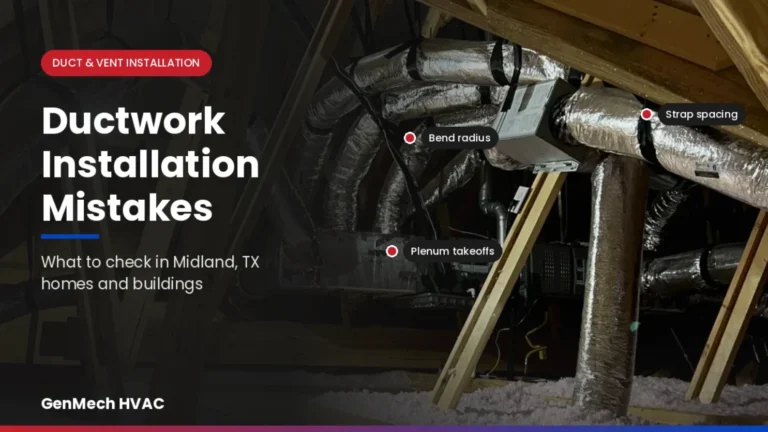
- Blocked or damaged ductwork
- Duct leakage
- Damaged belts or motors
- Coil restrictions
- Damper problems
- Improper system balancing
Airflow problems can allow an HVAC system to continue running while the building receives less effective cooling.
If weak airflow continues after routine filter service, it is worth investigating the rest of the system.
For facilities dealing with persistent airflow or duct problems, commercial ductwork and vent services can be part of the solution.
The HVAC Equipment Is Making New or Unusual Noises
Commercial HVAC equipment makes normal operating sounds. What matters is a noticeable change from the equipment’s normal sound.
Grinding, rattling, buzzing, squealing, or repeated clicking can indicate that a component needs inspection.
The cause can vary depending on the equipment and symptom. Belts, motors, bearings, fans, electrical components, compressors, and other mechanical parts can all produce different warning signs.
This is particularly relevant for equipment that runs for long stretches during high cooling demand.
A small mechanical issue may be easier to address before it develops into a larger equipment failure.
The Same HVAC Problem Keeps Coming Back
Repeated service calls for the same symptom should prompt a different question.
Instead of asking only, “How do we get the system running again?” facility managers should also ask, “Why does this keep happening?”
A recurring component failure may be a symptom of another underlying problem involving airflow, electrical conditions, refrigerant performance, controls, equipment age, or installation.
Our technicians at GENMECH HVAC regularly approach commercial HVAC problems by looking beyond the immediate symptom. The company’s commercial repair service covers rooftop units, split systems, VRF systems, and central air systems, with diagnostics focused on identifying the underlying cause.
That diagnostic approach is particularly useful when a facility has already paid for multiple repairs but continues to experience the same problem.
If a recurring issue is affecting your facility, commercial HVAC repair is the appropriate place to start.
Dust and Outdoor Conditions Are Affecting Your Equipment
West Texas operating conditions are another factor commercial facility managers should consider.
The National Weather Service office in Midland describes the region’s climate as semi-arid and notes that blowing dust occurs frequently during the late winter and early spring months, when strong winds move across the flat plains. Outdoor HVAC equipment is exposed to those conditions season after season.
That does not mean every facility needs the same maintenance schedule.
An office, warehouse, oilfield service facility, medical building, and manufacturing operation can have very different levels of exposure based on building design, operating hours, loading activity, doors, surrounding conditions, and equipment location.
Our technicians often see the practical effect of those conditions during commercial HVAC service. Dust accumulation, restricted airflow, dirty coils, and equipment that has been operating under demanding conditions can all contribute to declining performance.
The maintenance plan should therefore reflect how the facility actually operates rather than relying on the same schedule for every building.
Your Rooftop Units Are Showing Signs of Age
Many commercial buildings depend on rooftop units to condition individual areas of the facility.
As equipment ages, maintenance and condition become increasingly important.
Warning signs can include frequent repairs, declining cooling performance, unusual noises, electrical problems, repeated component failures, or difficulty maintaining indoor temperatures.
The question is not always whether an older RTU can still operate. A more useful question is whether the equipment is still providing the reliability and performance the facility requires.
Facility managers should consider equipment condition, repair history, operating requirements, energy use, building load, and expected remaining service life before deciding whether continued repair or replacement makes more sense.
If an RTU is repeatedly creating problems, commercial HVAC repair and RTU service can help determine whether the problem is repairable or whether the equipment needs a larger solution.
Your Building Controls Are Not Telling You What You Need to Know
Larger commercial facilities may use building automation systems to monitor and control HVAC equipment.
When properly configured, a BAS can provide visibility into equipment operation, schedules, alarms, temperatures, and other building conditions.
When controls are poorly configured, outdated, or malfunctioning, the building may not operate as intended. Incorrect schedules, faulty sensors, communication problems, overrides, or control sequence issues can cause equipment to run unnecessarily or fail to respond correctly.
For larger facilities, the problem may therefore be within the control system rather than the mechanical equipment itself.
GENMECH HVAC provides building automation system services for commercial facilities, including BAS integration, programming, troubleshooting, monitoring, and control optimization.
For facility managers, BAS data can also provide an opportunity to identify developing problems before they become major mechanical failures.
Why Early HVAC Warning Signs Matter for Midland Facilities
Midland’s commercial environment includes energy companies, oilfield service businesses, warehouses, distribution facilities, manufacturing operations, healthcare organizations, retail businesses, professional services, and aerospace activity. The Midland Development Corporation actively markets the area to aerospace and defense companies at the Spaceport Business Park and to industrial employers at sites along Interstate 20.
Each facility places different demands on its HVAC equipment.
An office may prioritize consistent temperatures and employee comfort. A warehouse may have large open areas, high ceilings, loading doors, and different airflow requirements. An industrial facility may operate equipment for extended periods. A medical facility may have greater requirements for consistent indoor conditions and ventilation. An aerospace or manufacturing facility may have equipment and operational requirements that differ substantially from a conventional office.
The HVAC strategy should therefore be based on how the building actually operates.
Preventive Maintenance Can Help Catch Problems Earlier
Preventive maintenance is more than changing filters.
A useful maintenance program should reflect the equipment installed in the facility, its operating schedule, environmental conditions, building use, and the consequences of downtime.
Depending on the system, maintenance may include filter service, coil inspection and cleaning, electrical checks, refrigerant evaluation, condensate inspection, belt and bearing checks, controls review, and other equipment-specific tasks.
The general mechanic offers commercial maintenance agreements that can be structured around equipment, facility requirements, and the level of service needed.
The objective is straightforward: identify developing problems while there is still time to plan for them.
A maintenance program can also give facility managers a clearer record of equipment condition, recurring issues, and repair history.
What Should You Do When You Notice These Signs?
Do not assume that every HVAC symptom means the equipment needs to be replaced. At the same time, repeatedly resetting or repairing the same problem may not address the underlying cause.
When a problem appears, document the change and look for patterns:
- When did the problem start?
- Which areas of the building are affected?
- Does it occur at certain times of day?
- Has the equipment required repeated repairs?
- Has energy consumption changed?
- Have filters and other routine maintenance items been addressed?
- Is the problem related to one unit or multiple systems?
This information can give an HVAC technician a better starting point for diagnosis.
For larger facilities, reviewing maintenance history and equipment age can also help determine whether repair, continued maintenance, or replacement deserves consideration.
Keeping HVAC Problems From Becoming Facility Problems
A commercial HVAC system is part of a building’s operating infrastructure.
When it performs properly, it may not receive much attention. When performance begins to decline, however, the effects can extend into employee comfort, customer experience, energy consumption, maintenance costs, and facility operations.
That is why early warning signs matter.
For Midland and West Texas businesses, local conditions, building use, equipment type, and operating schedules all influence HVAC performance. Recognizing changes early gives facility managers an opportunity to investigate the problem before a minor issue becomes a larger interruption.
How GENMECH HVAC Helps Midland Businesses
GENMECH HVAC is a veteran-owned, family-operated HVAC company based in Midland, Texas. Founded in 2008, the company brings more than 30 years of combined technician experience to commercial HVAC systems, including chillers, boilers, building automation, commercial refrigeration, rooftop units, and other commercial equipment.
GENMECH HVAC approaches commercial service with a focus on diagnostics, system performance, and long-term reliability rather than simply addressing the visible symptom.
If your facility is experiencing recurring HVAC problems, declining performance, uneven temperatures, or equipment that is becoming difficult to maintain, a professional evaluation can help identify what is actually happening.
You can explore commercial HVAC services, commercial HVAC repair, or commercial maintenance agreements based on your facility’s needs.
For facilities that depend on refrigeration, commercial refrigeration repair and service is also available through GENMECH HVAC.
The goal is not simply to get equipment running again. It is to understand why the problem occurred and determine what the facility needs to keep the system operating reliably.