It is one of the most common questions people type into Google before calling an HVAC company: how long does an HVAC system last in Texas? The national average you will find on most websites is 15 to 20 years. In Midland, Texas, that number is not your reality. West Texas heat, Permian Basin dust, and cooling seasons that stretch from April through October put a level of demand on residential and commercial HVAC equipment that most of the country never experiences. The honest answer for this region is closer to 10 to 15 years, and several factors can push that number lower if the system has not been properly maintained.
This post gives you a clear picture of what affects HVAC system lifespan in this climate, what warning signs to watch for as a system ages, and how to make a smart decision when the repair versus replace question comes up.
Why Texas Heat Shortens HVAC System Lifespan
An HVAC system in Minnesota might run 800 to 1,000 hours per year. A system in Midland, TX runs closer to 2,000 hours annually, sometimes more during a brutal summer. That runtime gap is the primary reason HVAC system lifespan in Texas falls well short of what manufacturers publish in national literature.
Every hour of operation puts wear on the compressor, the condenser coils, the fan motors, the capacitor, and the electrical components that keep the system running. A compressor that cycles on and off twice as often as one in a cooler state wears out in roughly half the time. Condenser coils operating in 105-degree ambient air work significantly harder to reject heat than coils in a 75-degree environment. Add the fine particulate dust common across the Permian Basin, which accelerates coil fouling and filter loading, and you have conditions that no national average accounts for.
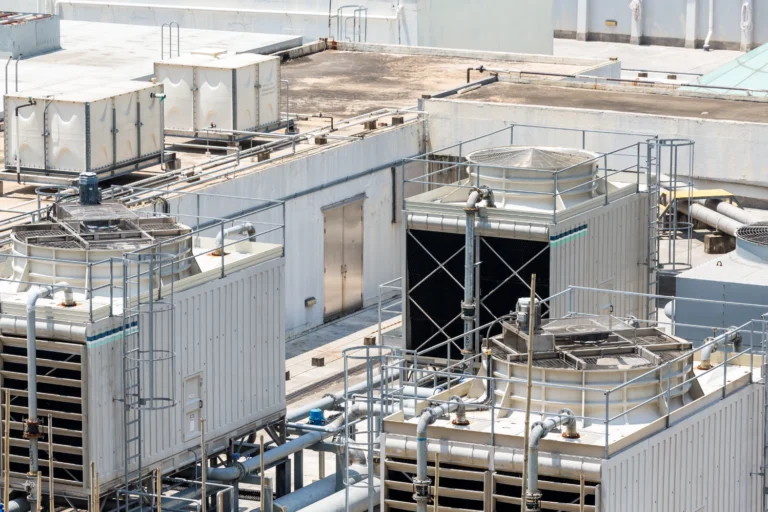
For commercial facilities in Midland, the math is even more significant. A commercial building running rooftop units or a central air handler 12 to 16 hours a day accumulates operating hours at a rate that makes a 10-year-old system genuinely old equipment, regardless of how it looks from the outside.
What Actually Determines How Long Your System Lasts
Maintenance History
This is the single biggest controllable factor in HVAC system lifespan. A system that receives annual inspections, consistent filter replacements, refrigerant charge verification, coil cleaning, and capacitor checks will outlast a neglected system by several years, sometimes close to a decade. The components that fail first on poorly maintained systems, including the compressor and the heat exchanger, are the most expensive to repair and the most likely to make replacement the only economical option.
Installation Quality
A system that was undersized for the building’s heat load runs constantly and never achieves the setpoint it is trying to hold. A system that was oversized short-cycles, which means it turns on and off frequently without completing a full cooling cycle. Both conditions accelerate wear far beyond what normal operation would produce. Poor ductwork connections, incorrect refrigerant charge at startup, and improper drainage setup all create problems that compound over years of operation.
Equipment Quality and SEER Rating
Higher SEER rated equipment is generally built to tighter tolerances and runs more efficiently under load, which produces less heat stress on internal components. In a climate like Midland’s, the efficiency advantage of a higher SEER system also translates to fewer operating hours for the same cooling output, which directly extends component life. Budget equipment installed in West Texas heat tends to reach end of life on the shorter end of the lifespan range.
Warning Signs Your HVAC System Is Approaching End of Life
Age alone does not determine when to replace an HVAC system. A 14-year-old system that has been maintained consistently may have several years of reliable service remaining. A 9-year-old system that has been neglected and repaired repeatedly may already be past the point where further investment makes sense. Watch for these indicators regardless of age.
Repair frequency is increasing. One repair every few years is normal for any mechanical system. If you are calling for service once or twice per season and the repairs involve compressor components, refrigerant leaks that return, or heat exchanger issues, the system is telling you something clearly.
Energy bills are climbing without an obvious explanation. A system losing efficiency works longer to deliver the same temperature. If your cooling costs have increased noticeably over two or three seasons without a change in usage or occupancy, the system is degrading.
The system cannot hold setpoint on hot days. A properly sized and functioning system should be able to maintain your thermostat setting even on the hottest Midland afternoons. A system that gives up above a certain outdoor temperature is either undersized, low on refrigerant, or has compressor capacity loss that will only get worse.
Unusual sounds during operation. Grinding, rattling, or banging sounds from the air handler or the outdoor condenser unit indicate mechanical wear that has progressed to a point requiring professional evaluation. These sounds do not go away on their own.
The HVAC Repair vs Replace Decision
The HVAC repair vs replace question comes down to three numbers: the cost of the repair, the age of the system, and the expected remaining useful life. A simple way to evaluate it is to multiply the repair cost by the age of the system in years. If that number exceeds the cost of a new system, replacement is almost always the better financial decision.
For example, a $1,200 compressor repair on an 11-year-old system produces a product of $13,200. If a replacement system costs $8,000 to $10,000 installed, the math favors replacement. A $400 capacitor replacement on the same system produces $4,400, which clearly favors repair.
The calculation changes for commercial systems where replacement involves larger equipment, longer lead times, and more complex installation. For commercial facilities, the HVAC repair vs replace analysis should also account for energy savings from a more efficient replacement system, potential utility rebates, and the risk cost of an unplanned failure during peak cooling season.
One factor that often gets overlooked is refrigerant type. Systems manufactured before 2010 may use R-22 refrigerant, which is no longer produced and is increasingly expensive to source. A system requiring R-22 top-offs is approaching the end of its economically viable life regardless of how the other numbers look.
How Long Should You Expect Your System to Last in Midland, TX
Here is a realistic lifespan guide for the West Texas climate, assuming average maintenance:
- Central AC units and heat pumps: 10 to 14 years. With consistent annual maintenance and prompt attention to minor repairs, some systems reach 15 years. Neglected systems often fail before 10.
- Gas furnaces: 15 to 20 years. Furnaces run far fewer hours per year in Midland than AC systems do, which is why their lifespan holds closer to the national average. Heat exchanger cracks are the primary failure mode to watch for in older furnaces.
- Commercial rooftop units: 10 to 15 years under normal commercial operating hours. Units in facilities running extended hours or under heavy process loads can reach end of life sooner.
Answering how long does an HVAC system last in Texas honestly means acknowledging that Midland is not average. The heat load here is real, the dust load is real, and the cooling season is genuinely long. A system that would last 18 years in Denver will last 12 in Midland under identical maintenance conditions.
GenMech HVAC: Honest Assessments for Midland Homeowners and Commercial Clients
At GenMech HVAC, we have been servicing residential and commercial systems across West Texas since 2008. When a customer asks us whether to repair or replace, we give them both numbers in writing and let them decide. We do not push replacement on systems that have reliable service remaining, and we do not recommend repairs on systems where the investment does not make financial sense.
If your system is aging, performing inconsistently, or you are simply not sure where it stands, a professional assessment gives you the information you need to plan ahead rather than react to a failure. Call GenMech HVAC at (432) 528-8905 or contact us online to schedule an evaluation for your home or commercial facility in Midland, TX.